
Under the patronage of the President of Al-Qadisiyah University, the respected Professor Dr. Kazem Jabr Al-Jubouri
Under the supervision of the Dean of the College of Pharmacy, Assistant Professor Dr. Asaad Hassan Al-Zaidi
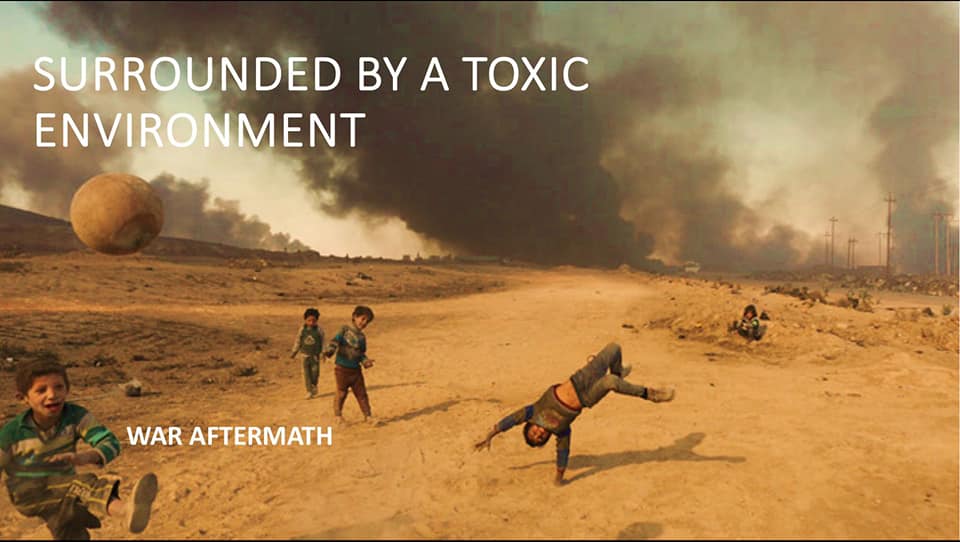
On Tuesday 10/24/2023, the College of Pharmacy held a panel discussion on the toxic environment left behind by wars and armed conflicts.
Delivered by: M.M. Nahed Sabah El-Din Saber
Interlocutor:
An introduction to the damage caused by wars and armed conflicts to the environment and their effects on human health in the short and long term.
Wars and armed conflicts may end, but their toxic impact on the environment and human health continues for decades after they end, and their toxic impact is not limited to those who have lived through wars only, but also extends to innocent souls who did not witness these wars through disabilities and birth defects that extend for several generations. After the war. The use of radioactive materials in military manufacturing, such as uranium, and heavy metals, such as lead and mercury, constitutes a direct source of environmental pollution after wars, while the collapse of infrastructure constitutes one of the indirect sources of environmental pollution related to wars.
Summary of the episode: Focus on the importance of raising awareness about the consequences of wars on human health by surrounding them with a toxic environment and clarifying the results of studies conducted in Iraq regarding the post-war health consequences and their impact on the increase in cancer cases and genetic deformities in several Iraqi cities and the increase in birth defect rates for several years afterward. The war in cities such as Basra and Fallujah, as well as the detection of the presence of heavy metals such as lead and mercury in the soil in several Iraqi cities and also in the hair samples of the residents of these cities.


لا تعليق